
Grand Rapids senior apartments are age-restricted rentals for adults 55 or 62 and older, ranging from income-based units where rent tracks household income to full-service communities with dining, wellness programs, and on-site care. In west Michigan’s largest city, older adults can choose independent living, assisted living, or memory care across Kent County, East Grand Rapids, and Wyoming. Independent options start around $900 a month.
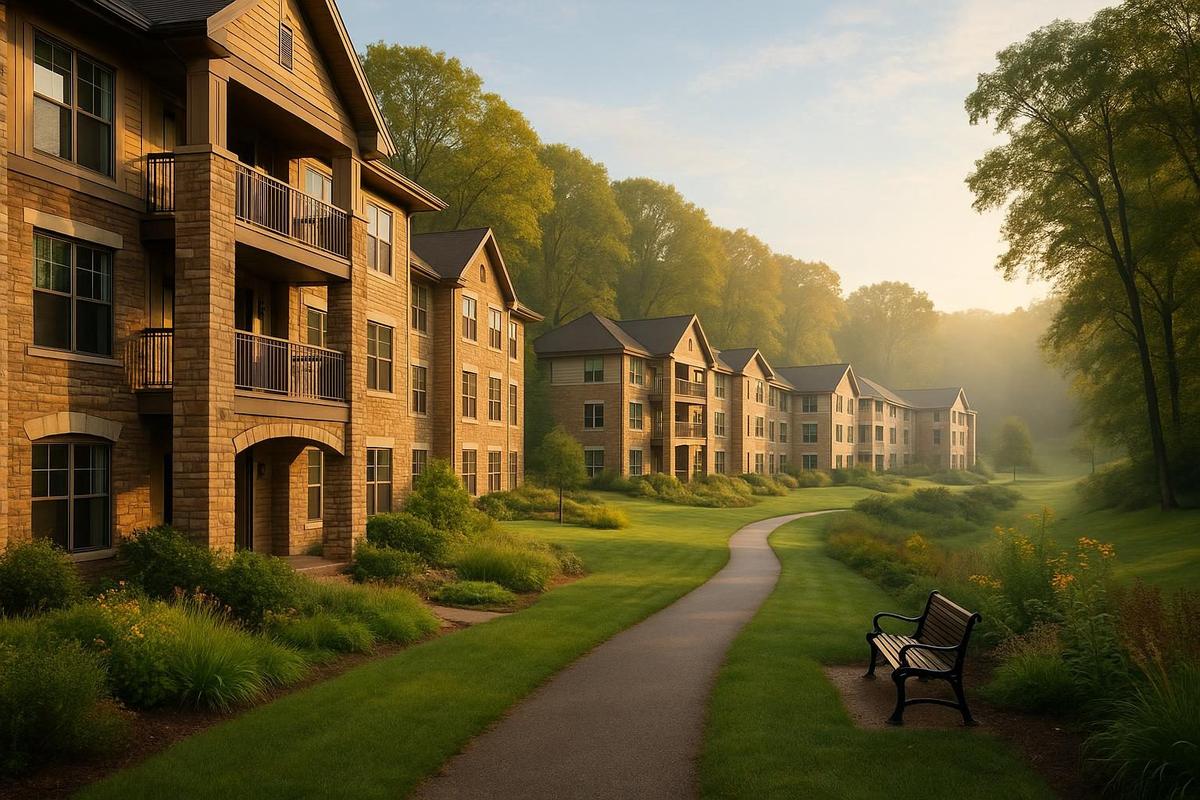
Three Types of Grand Rapids Senior Apartments Compared
The local market splits into three tiers of senior housing, and the right one depends mostly on income and how much daily help a loved one needs now or expects to need soon.
| Type | Best fit | Monthly cost | Care on site |
|---|---|---|---|
| Income-based (Section 8, Section 202, Housing Commission) | Low or very low income households | Tied to adjusted income | Usually none |
| Market-rate age-restricted rental | Active adults living independently | From around $900 | None |
| Service-enriched or continuum campus | Residents who want meals and care that can increase | Up to $4,500 or more with assisted support | Assisted living, memory care |
One distinction trips up many families. An age-restricted apartment is a housing category, not a care setting, so the lease includes no personal help unless the property puts it in writing. Assisted living adds hands-on support with bathing, dressing, and medication reminders, which is what drives the higher price.
Four Local Communities Families Ask About Most
Each of these senior living communities in Grand Rapids sits at a different point on the cost and care spectrum.
Porter Hills Village
Porter Hills Village provides a full continuum of care with independent and assisted options. As a continuing care retirement community, it lets a resident move from an apartment to assisted support without changing neighborhoods. The one-bedroom and two-bedroom layouts are modern, and residents enjoy restaurant-style dining, fitness programs, and wellness services that adapt to every stage of life.
StoryPoint Grand Rapids West
StoryPoint offers assisted living, memory care, and independent options under one roof. Units are safe and secure, with 24-hour staff and accessible designs. Occupants get chef-prepared meals, social programs, and daily wellness activities, a combination that helps couples with different care needs stay together.
Grand Woods Senior Apartments
Grand Woods provides affordable units for those looking for independence, comfort, and maintenance-free living. The property includes one-bedroom and two-bedroom floor plans with modern kitchens, laundry rooms, and energy-efficient features. Indoor recreation areas and outdoor seating give tenants places to socialize.
Sentinel Pointe
Sentinel Pointe combines comfort with care. Each unit includes a full kitchen, walk-in shower, and spacious living area. Tenants dine on site, join group outings, and take part in daily wellness activities. The location near the downtown district gives easy access to local attractions.
Why Retirees Pick This City Over Other Michigan Metros
Affordability leads the list. The cost of living in GR runs roughly 8% below the national average, which stretches a fixed retirement income further than comparable Midwest metros. The furniture capital also offers easy access to hospitals, shops, cultural venues like Frederik Meijer Gardens, and walkable neighborhoods, with Lake Michigan beaches within an hour’s drive.
Transportation deserves more weight than most movers give it. Once someone stops driving, a convenient bus line or grocery store nearby shapes daily life more than any amenity list does.
Looking for retirement options in Ann Arbor? That city offers a similarly strong mix of healthcare and walkability. Families exploring other MI metros can also browse Dearborn retirement communities or Kalamazoo apartment rentals. Adult children relocating a parent closer to them can compare Ann Arbor apartment rental options or start from the full set of Michigan apartment guides.
How to Qualify: Age Rules, Income Limits, and Waitlists
Qualifying comes down to three checks: the property’s age rule, household income if the unit is subsidized, and your place on the waiting list.
Which Age Rule a Property Follows
Under the Housing for Older Persons Act, the federal law that allows age-restricted housing, an age-qualified community must have at least one resident aged 55 or older in at least 80% of occupied units. A stricter type requires every resident to be 62 or older, and federal subsidies often use that higher threshold. At the city’s public housing buildings that admit residents younger than 62, applicants under that age must have a disability to receive a federal rental subsidy.
Income-Based Grand Rapids Senior Apartments
Properties accepting Section 8, the federal voucher program, use area median income thresholds set by HUD, and voucher holders generally pay about 30% of adjusted income toward rent. HUD’s Section 202 program funds buildings for very low-income households (at or below 50% of area median income) with a member aged 62 or older. Veterans may qualify for additional rental assistance through state programs.
The Grand Rapids Housing Commission, the city’s public housing agency, runs five buildings for older adults and people with disabilities, including Ransom Tower and Mount Mercy Apartments. It reports waiting lists for every unit, and one online application covers each development you qualify for. Once a unit opens, approval typically takes two to six weeks.
Help From the Area Agency on Aging of Western Michigan
The Area Agency on Aging of Western Michigan, the regional agency serving Kent County, administers county millage-funded programs for residents 60 and older. Its care management and caregiver support can delay a move to assisted living, which changes which tier a family should shop.
Questions to Ask Before Signing a Lease
Pricing sheets rarely show the full monthly cost, so get these answers in writing when you schedule a tour:
- What rent includes. Utilities, meals, housekeeping, and transportation are bundled at some properties and billed separately at others.
- How care fees change. Ask what triggers a higher care level and how much notice precedes a price increase.
- What happens if needs outgrow the building. Some campuses transfer residents to memory care on site; others require a move out.
- Lease break terms. A hospital stay can force a sudden move, so check the notice period and any early termination fee.
- Waitlist rules. Ask whether declining an offered unit sends you to the back of the line.
Then compare floor plans, included amenities, and care levels side by side using each property’s full monthly total, not the advertised base rent.
Start by deciding which tier fits your budget and care needs, then file income-based applications right away, since those lists move slowest. If care needs are likely to grow, compare care options at a continuum campus before committing to a standalone lease. Applying to two or three Grand Rapids senior apartments at once keeps your options open while paperwork processes.
Frequently Asked Questions
What is the cheapest way for a senior to live?
Subsidized units through Section 8 vouchers, Section 202 buildings, or income-based communities offer the lowest monthly costs. Some properties in west MI charge as little as 30% of a tenant’s adjusted gross income.
How long does it take to get approved for age-restricted apartments?
Applications usually take two to six weeks for processing. High-demand properties may have waitlists that add several months.
What is the 80/20 rule for 55+ communities?
Under federal fair housing law, at least 80% of occupied units must have one resident aged 55 or older. The remaining 20% can house younger occupants.
What is low income for seniors in Michigan?
Low income is set by county and household size, not one statewide number. HUD updates income limits every year: low income means at or below 80% of area median income, and very low income means at or below 50%. Confirm current Kent County figures with a leasing office before applying.