Ann Arbor apartment buildings fall into a few clear groups: concrete high-rises in the city center and near campus, older houses split into apartments on the blocks around the University of Michigan, and garden-style complexes and townhomes on the west, north, and south edges of the city. The building type decides more about daily life than the listing photos do. It sets how much noise travels between neighbors, who controls the heat, whether parking exists, and how early you need to sign.
The city sits in Washtenaw County, Michigan, and many renters here rely on buses run by the Ann Arbor Area Transportation Authority (TheRide) as much as on a car. Whether you need a studio for solo living or a four-bedroom unit for roommates, matching the building to your routine narrows the search fast.
Types of Ann Arbor Apartment Buildings Compared
Most apartments in Ann Arbor sit in one of four building types, and each carries a predictable set of trade-offs:
| Building type | Where it’s common | Noise from neighbors | Heat and utilities | Parking |
|---|---|---|---|---|
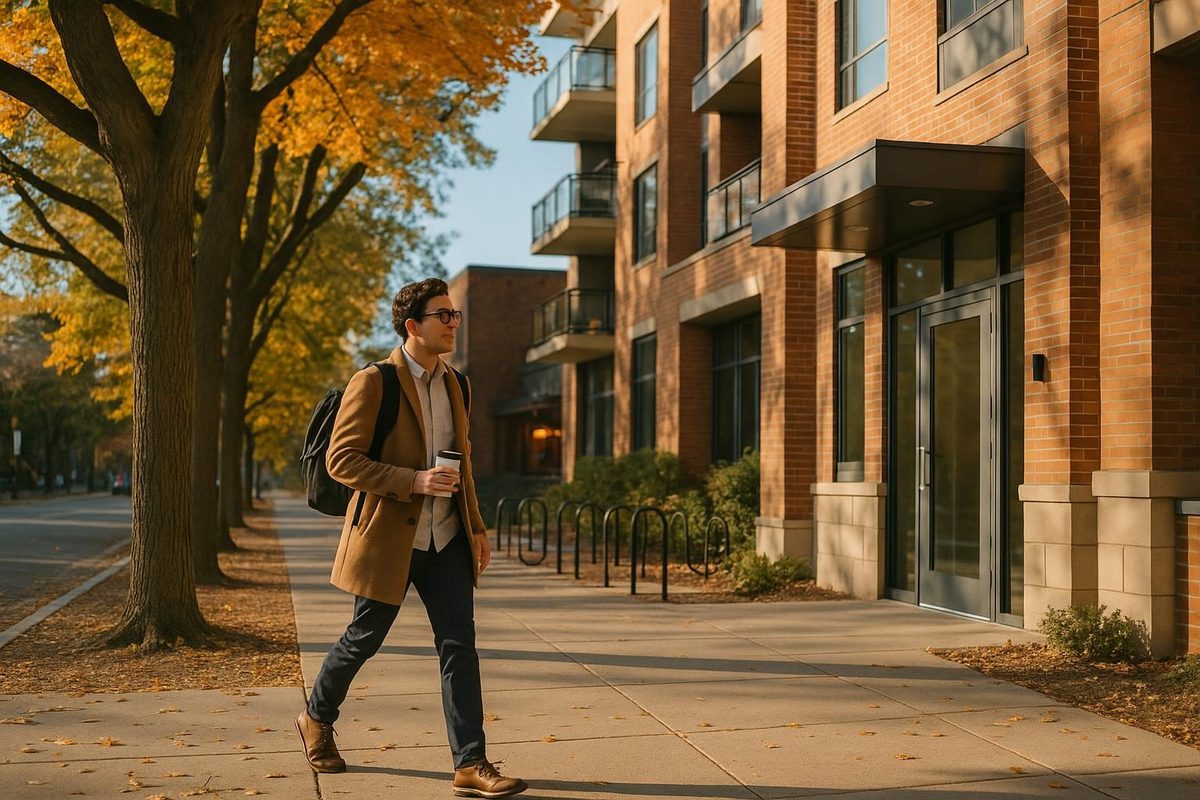
| High-rise or mid-rise tower | City center, State Street, South University | Low (concrete floors) | Central systems, some utilities bundled | Garage, often an added monthly fee |
| Converted house (2 to 6 units) | Blocks around Central Campus, Old West Side | Higher (wood floors, shared stairs) | Older boilers or furnaces, sometimes one shared meter | Driveway spots or none |
| Garden-style complex | West, north, and south edges | Moderate (footsteps from above) | Individual meters, tenant pays most | Surface lot, usually included |
| Townhome community | Outer neighborhoods, nearby townships | Low (side walls only) | Individual meters | Attached garage or assigned spots |
City-Center and Campus High-Rises
A high-rise here means a concrete or steel-framed tower with elevators, controlled entry, and on-site management. Concrete floors block footfall noise far better than wood framing, so these floors stay fairly quiet even when every bedroom is full. The trade-off is cost. Luxury properties cluster near campus and in the city center, and they charge premium rates for finishes like quartz countertops, in-unit laundry, and controlled-access parking.
Many newer towers near campus lease by the bedroom, with furniture included. Ask whether the lease is joint or individual. On a joint lease, every roommate is on the hook for the full rent if one person leaves.
Older Houses Split Into Apartments
A large share of the housing near campus sits inside older houses that were divided into two to six units. Rent per bedroom tends to run lower than in the towers, and the character is real: porches, hardwood, tall windows. The weak points are just as predictable. Wood floors carry sound, original windows leak heat, and a single boiler may heat the whole house, which means you don’t set your own temperature.
Ask who pays for heat before anything else. With one gas meter for the whole house, heat is usually folded into rent. With split meters, a drafty apartment can push winter bills well past what the listing implied.
Garden-Style Complexes and Townhomes on the Edges
Garden-style complexes are two- and three-story walk-up buildings grouped around parking lots and green space. They trade nightlife for calm, tree-lined blocks with larger lots and lower rates, and usually more square footage for the money. Surface parking is normally included. The catch is wood-frame construction: ground-floor tenants hear footsteps, so the top floor is the quieter pick if you’re sensitive to noise. Townhome communities go one step further, with private entries, two floors, and shared walls only on the sides.
Why the Building Matters More Than the Floor Plan
Two identical one-bedroom layouts can feel completely different depending on the structure around them. The reasons are mostly physical, and they show up in four places:
- Sound. Concrete slabs stop impact noise; wood joists pass it straight down. Street noise is a separate issue, and it drops off sharply a few blocks away from South University, so the residential areas north and west of campus are quieter than most people expect.
- Heat. Central systems in towers and shared boilers in old houses take control away from you. Individual furnaces in garden complexes give it back, along with the bill.
- Parking. City-center garages often charge per month on top of rent, while edge-of-town complexes include a spot. Parking cost and transit access shape the true monthly total, so price them alongside base rent.
- Lease cycle. Student-oriented buildings near campus run on fall-to-fall leases and fill early. Complexes on the edges lease year-round, so a January or June move-in is easier there.
Floor Plans You’ll Find in Each Building Type
Studio units work for minimal living with efficient kitchens and smart storage, and they’re most common in towers and converted houses. A one-bedroom layout adds a separate living space for remote work or hosting guests. 3 bedroom and 4 bedroom configurations give roommates or families room to spread out, often with a second bathroom and a dedicated dining area.
Bedroom count tracks building type. Four-bedroom apartments concentrate in the student towers and larger split houses near campus, while garden complexes on the edges mostly top out at two or three bedrooms. Families wanting a yard usually do better in a townhome community.
Amenities That Signal Good Management
Strong amenities separate a decent rental from a great one. On-site maintenance with fast response times, secure package rooms, and reliable elevators signal solid management. Many apartment communities add fitness rooms, study rooms, outdoor courtyards, and reservable lounges.
Premium student properties sometimes include furniture, group study spaces, and quiet zones during exam weeks. Ask about internet service too. Some buildings bundle Wi-Fi into rent, which simplifies budgeting for college students. A small converted house won’t have a gym, but a landlord who answers repair requests within a day is worth more than a rooftop deck.
How to Judge a Building Before You Sign
Judge the building first and the unit second. A nice kitchen can’t fix thin floors, a failing boiler, or a missing city certificate.
What to Test When Touring Ann Arbor Apartment Buildings
Schedule a tour during evening hours so you can hear real noise levels and see how parking fills up. Focus on details that affect your daily routine:
- Water pressure and hot-water recovery time
- Window condition and natural light in each bedroom
- Kitchen and bathroom storage capacity
- Appliance age and the building’s service policy
- Cell coverage and Wi-Fi quality inside the apartment
- Safety features, guest access rules, and package handling
- Commute time to campus or your workplace
Then flush the toilet while the shower runs. If pressure drops noticeably, the plumbing may struggle during peak hours, a problem that shows up most in older houses where several apartments share one supply line. That test takes five seconds and tells you more than any listing photo.
Confirm the Certificate of Compliance
A Certificate of Compliance is the city’s proof that a home passed its housing inspection, and the City of Ann Arbor won’t allow a property to be leased or advertised without a current one. Ask the landlord for the certificate’s expiration date, or check the property through the city’s rental registration and inspection page. Properties in the surrounding townships fall under separate township rules.
Rates, Lease Timing, and Local Leasing Rules
Rent in Ann Arbor shifts by neighbourhood and amenity set. Downtown rentals run higher because of walkability and entertainment access, while buildings on the west or south side may offer a better rate with a larger living space. Leasing teams post openings on rolling cycles, so set alerts and act quickly when a new listing matches your needs.
Timing near campus follows city law. The Early Leasing Ordinance bars landlords from showing an occupied unit or signing a lease for the next term until 150 days remain on the current tenant’s lease, and a separate Right to Renew ordinance requires landlords to offer current tenants a renewal 180 days before the lease ends. UMich enrolls more than 53,000 students, which keeps the rental market competitive each spring when leases turn over. Start early if you need housing near campus for fall.
Before signing, review renewal terms, utility pass-throughs, pet policies, and any furniture fees. Confirm how the property handles sublets and roommate changes. Michigan’s Security Deposit Act also caps a deposit at one and a half months’ rent, so a request for more than that is a red flag.
Where Students, Seniors, and Commuters Should Look Next
The neighborhood around a building is the other half of the decision. Downtown delivers energy, entertainment, and short commutes. Kerrytown mixes a historic market vibe with small shops, restaurants, and boutiques. The Huron River trail system adds outdoor recreation right inside city limits, and the west side offers quiet blocks minutes away from the core.
Students should explore UMich off campus housing, which offers more independence than dorms while keeping classes a short walk or bus ride away. Working renters who want walkability can compare apartments near downtown and UMich. For a parent or relative, the city also has senior living communities designed for independent residents who want maintenance-free routines, meal plans, and transportation services. Comparing cities? See Kalamazoo apartments and condos or senior apartment communities in Grand Rapids.
Start by deciding which trade-off you can live with: noise, heat control, parking, or price. Then shortlist Ann Arbor apartment buildings of that type, tour them in the evening, and ask for the Certificate of Compliance before you put a deposit on any apartment in Ann Arbor. If a fall move-in near campus is the goal, have your shortlist ready before the 150-day leasing window opens.
Frequently Asked Questions
What is the average rent in Ann Arbor, MI?
Average rent varies by unit size and location. Studio units typically start around $1,100 per month, while one-bedroom apartments range from $1,200 to $1,600. Two-bedroom and three-bedroom layouts run between $1,500 and $2,500 depending on proximity to campus and included amenities.
When can a landlord show my apartment to next year’s tenants?
Under the city’s Early Leasing Ordinance, a landlord cannot show an occupied unit or sign a lease with a new tenant until 150 days remain on the current lease. Before that point, the Right to Renew ordinance requires the landlord to offer the current tenant a renewal 180 days before the lease ends.
What colleges and universities are in Ann Arbor, MI?
The University of Michigan is the primary institution, enrolling more than 53,000 students across its main campus. Washtenaw Community College also operates in the area, adding to rental demand from students and staff.
Do I need a car to live in Ann Arbor?
Many residents manage without one. TheRide runs bus routes across the city, and bike infrastructure covers most major corridors. If you live near campus or downtown, walking handles most daily errands. A car helps for trips outside the city or bulk grocery runs.